Clean tools are easier to inspect, store and use consistently. Start with the care instructions for the exact product. Similar-looking tools can have different materials, coatings and dishwasher requirements.
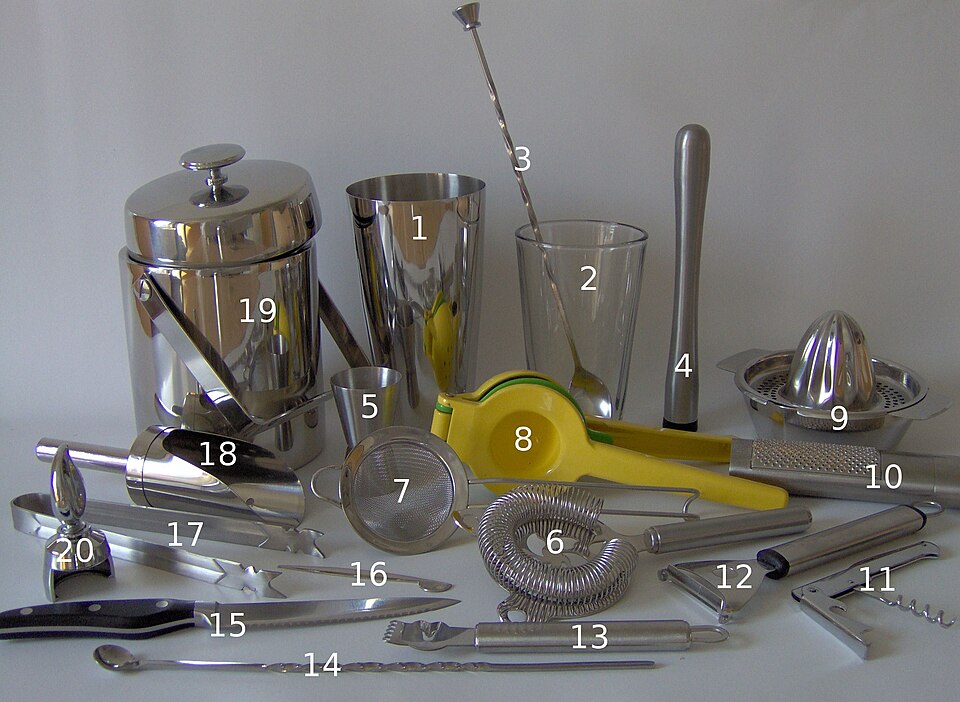
Separate, rinse and wash
Take shaker parts apart after use. Rinse pulp and sticky ingredients before they dry in place, then wash with a suitable detergent following the manufacturer’s directions. Rinsing between drinks is not a replacement for a thorough wash.
Pay attention to strainer springs, fine mesh, seams and removable heads. Remove parts only when the maker intends them to come apart. Use a suitable soft brush where necessary rather than sharp objects that could damage the surface.
Match care to the material
| Material or feature | What to check |
|---|---|
| Plain stainless steel | Product-specific dishwasher guidance and complete drying |
| Decorative coating | Whether abrasives or dishwashing could damage the finish |
| Wood | Washing, soaking and drying instructions |
| Glass | Chips, cracks and temperature-care guidance |
| Fine mesh | Trapped residue and broken wires |
Dry before storing
Let tools dry fully before nesting or closing them. Store shaker pieces separately or loosely arranged so moisture is not trapped. Keep knives and peelers protected and avoid stacking metal tools against glass rims.
Inspect while cleaning
Remove chipped glass, loose handles, broken mesh and peeling finishes from use. Do not assume a discoloured or damaged item can be restored with an aggressive household chemical; check the manufacturer’s advice first.
Professional settings also need the cleaning and sanitising procedures required for their equipment and location. This home-care routine does not replace those procedures. For an easier daily setup, read home bar organisation.
Include care in the buying decision
When replacing a tool, compare its material and storage needs alongside its function. Our home-bar equipment picks focus on practical everyday use, and the comparison of ten barware brands identifies the model-specific checks to make before buying.
Choose a routine for the material
- Copper and gold-finish barware: identify the actual surface before selecting cleaners or a dishwasher routine.
- Stainless steel shakers: check the complete model, finish, seals and lid components.
- Wooden muddlers: wash promptly, avoid prolonged soaking and dry fully before storing.
Store tools with enough separation to avoid scraping decorative finishes. Keep shaker parts apart or loosely nested after they have dried, and use a ventilated dry place for wooden tools. A material name is a starting point for finding care instructions, not permission to use every cleaner.
Frequently asked questions
Can all bar tools go in the dishwasher?
No. Materials, coatings and construction vary. Follow the instructions for the exact model and finish.
Is rinsing enough?
A between-use rinse is not a replacement for thorough cleaning. Wash after the session and follow the appropriate hygiene procedures for the setting.
Should I store shaker parts tightly assembled?
Dry them fully and store separately or loosely arranged so residual moisture does not remain trapped.
What damage should make me stop using a tool?
Chipped glass, sharp broken mesh, peeling finishes, splits and loose parts are reasons to remove the affected item from use.