Bar Tool Care and Storage
Clean a wooden muddler after use, keep soaking brief and let it dry fully before storage. The exact care depends on whether the wood is unfinished, sealed or treated, so read the instructions for your model before adding oil or other products.
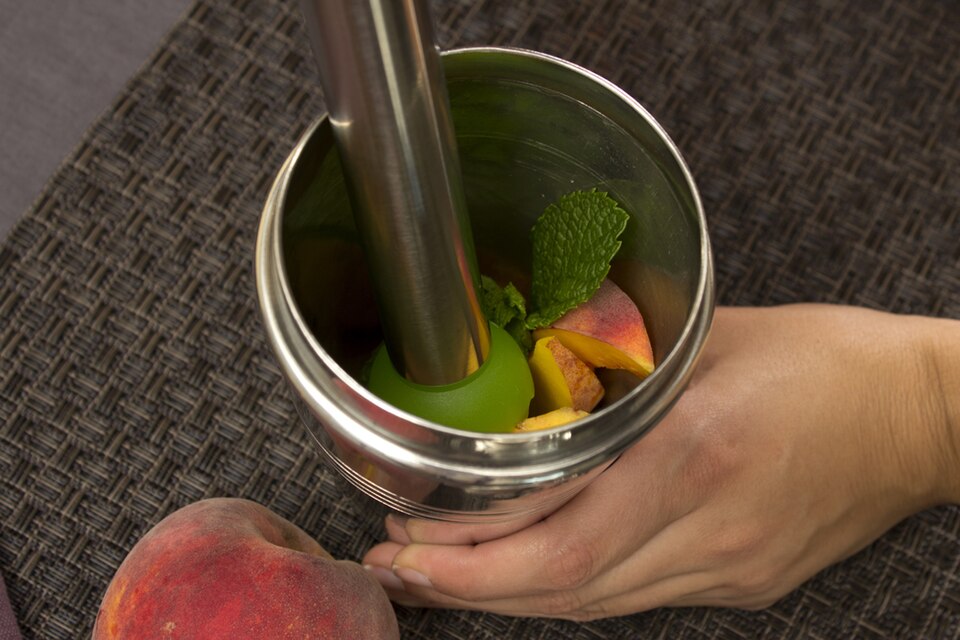
Clean promptly after muddling
- Remove fruit pieces, mint and other loose residue.
- Hand-wash with warm water and a little mild washing-up liquid, unless the maker gives different instructions.
- Use a soft brush if needed to reach a textured head without gouging the surface.
- Rinse away soap and ingredients.
- Wipe off water and leave the tool in a ventilated place to finish drying.
Check the head and any transition into the handle. Sticky residue is easier to remove before it dries. Avoid leaving the muddler in a wet tin or sink while the rest of the station is cleared.
Avoid prolonged soaking and unapproved machine washing
Repeated wetting, heat and drying can be hard on wooden tools. Do not put a wooden muddler in the dishwasher unless its maker explicitly permits it. Hand washing and prompt drying are common instructions for unfinished wooden models.
Never store it while damp in an enclosed box or tightly packed drawer. Choose a dry place that allows the head to finish airing, and keep it away from a direct heat source used to accelerate drying.
Does a wooden muddler need oil?
Not every model has the same surface treatment. Follow the manufacturer’s recommendation for whether to oil it, which product to use and how to apply it. If a food-contact conditioning oil is recommended, use that type rather than improvising with cooking oil.
Do not coat an unfinished muddler with varnish or a household wood product. A kitchen or furniture treatment is not automatically suitable for repeated contact with cocktail ingredients.
Inspect before using it again
Look for splinters, cracks, a loose assembly or residue that cannot be removed by the permitted cleaning routine. Stop using a damaged tool rather than pressing it harder or hiding the damage under oil. Replacement can be more practical than attempting an unapproved repair.
Care begins with technique
Use controlled pressure in a sturdy vessel. A muddler is not a reason to strike delicate glass or pound herbs into paste. Choose enough handle length to keep your grip clear of the rim, and clean the head between ingredients when flavour transfer would be unwanted.
Frequently asked questions
Can I put a wooden muddler in the dishwasher?
Do not unless the exact maker’s instructions permit it. Hand washing and thorough drying are the appropriate default for an unidentified wooden model.
Should I leave it soaking to remove mint?
Avoid prolonged soaking. Remove loose leaves promptly and use the permitted gentle washing routine.
Can I use olive oil to condition it?
Follow the manufacturer’s oiling guidance. Do not substitute a cooking oil for a specified food-contact conditioning product.
When should I replace it?
Stop using it when splinters, cracks or other damage make the surface unsuitable, or when it cannot be cleaned by the permitted method.