Muddling presses ingredients to release flavour, aroma or juice. The right pressure depends on what you are working with. Treating a mint leaf like a firm piece of fruit can produce a texture the recipe never intended.
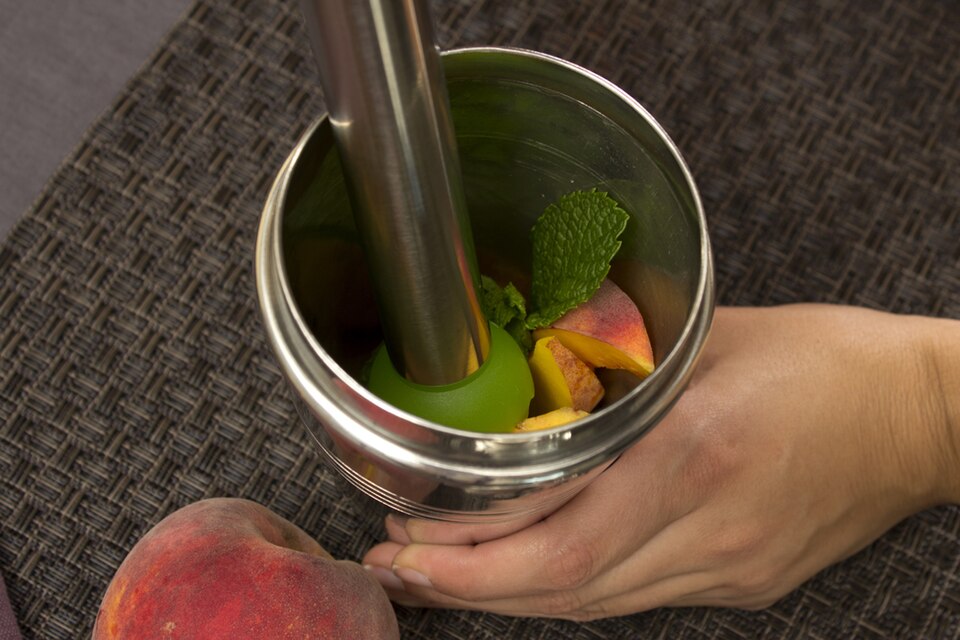
Choose a suitable vessel
Use a stable vessel intended for the task. A tall shaker tin can be practical if the muddler reaches far enough above its rim. Avoid fragile or damaged glassware and do not pound the bottom with sharp impacts.
Start gently with herbs
Place the prepared herbs where the muddler can contact them. Apply light pressure and a small movement, then reassess. The aim is usually to release aroma, not turn the leaves into a paste. Follow the recipe if it calls for a different preparation.
Use controlled pressure for fruit
Prepare fruit to a manageable size and press gradually. Stop when you have released the juice or broken down the ingredient to the intended texture. Seeds, peel and pith can affect flavour and texture; do not grind them indiscriminately.
Finish the drink as written
Some recipes retain the muddled ingredients, while others call for straining. Decide before you start so the right serving glass and strainers are ready. If a smooth result is required, a fine mesh strainer may be useful after the primary strainer.
Clean the tool
Wash promptly, paying attention to textured heads and joins. Dry wood fully and follow the maker’s instructions for soaking and dishwashing. A split or peeling head should be removed from use.
Choose a comfortable tool in our muddler guide, and read double straining for preparations where small fragments should be removed.
How to muddle mint without grinding it
- Use fresh leaves and the quantity specified by the recipe in a suitable sturdy vessel.
- Hold the muddler where you can control the head while keeping your hand clear of the rim.
- Apply a few light, deliberate presses. Release aroma rather than grind the leaves into a shredded paste.
- Stop once lightly bruised and continue with the recipe. Do not use a fixed number of strokes as permission to keep crushing.
Fruit and sugar may require a different approach from delicate herbs. Overworking mint can produce an unpleasant leafy result, but bitterness can also come from other ingredients, so inspect the whole recipe. Some shaken mint drinks do not require a separate aggressive muddling stage.
Keep the head clean with our wooden muddler care guide, or compare appropriate household substitutes.
Frequently asked questions
Should herbs and fruit receive the same pressure?
No. Start gently with delicate leaves and use controlled pressure for firmer ingredients. Stop when the recipe purpose is achieved.
Can I muddle in any glass?
Use a sturdy, suitable vessel. Avoid fragile or damaged glass and do not pound the bottom with sharp impacts.
Should I strain after muddling?
Follow the recipe. Some drinks retain the ingredients; others need a primary strainer and possibly fine mesh.
How do I clean a textured muddler?
Wash promptly and clear trapped residue with a suitable gentle method. Follow the material-specific instructions and dry fully.