Cocktails and Tools
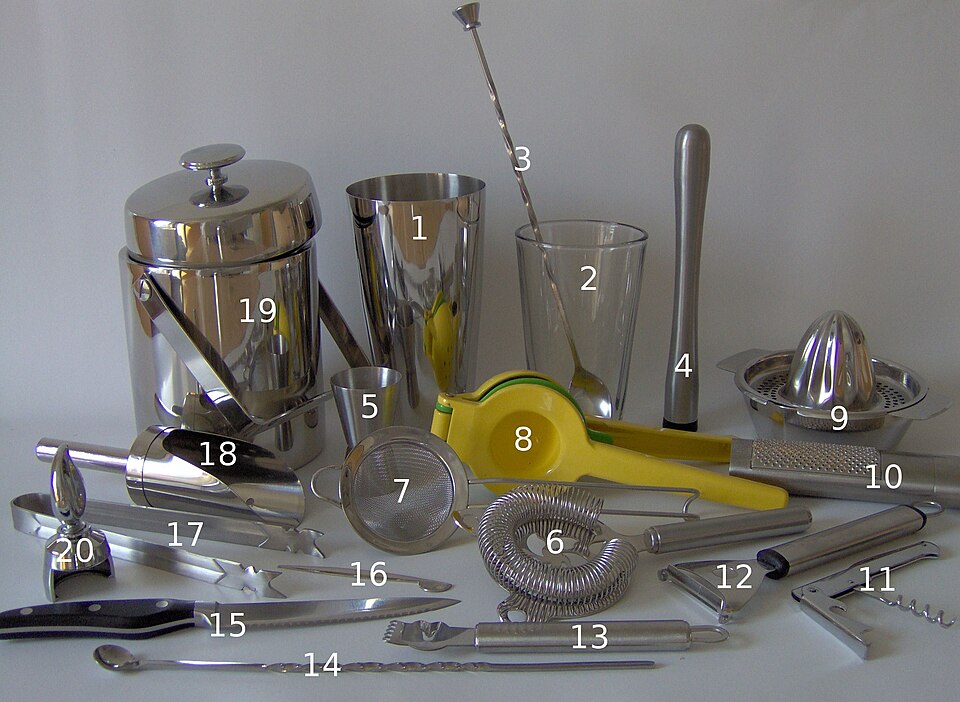
A useful substitute performs the same task with enough control. Use a long clean spoon for stirring, an appropriate smooth food-safe tool for gentle pressing and a kitchen sieve for separating ice and solids. Not every household object is a suitable bar tool.
Instead of a bar spoon
A long teaspoon or clean stirring spoon can work if it reaches the bottom of the vessel while leaving a comfortable grip above the rim. Guide it around the inside rather than clattering against the walls. A very short spoon makes tall vessels awkward, so choose a different vessel if needed.
The bowl is not a reliable liquid measure unless its volume is specified. Use a graduated measure or measuring spoons for ingredients, then use the stirring spoon only to mix.
Instead of a muddler
The smooth rounded end of a clean food-safe wooden spoon may suit gentle pressing if its condition, shape and reach are appropriate. Use a sturdy vessel on a stable surface and apply controlled pressure. Avoid painted handles, splintered wood and objects not intended to contact food.
For mint, the aim is a light press rather than grinding leaves into paste. A substitute that feels too narrow or unstable is a reason to stop and change the method. Some recipes can use lightly handled herbs without a separate muddling stage; follow the recipe rather than forcing every ingredient through the same technique.
Instead of a cocktail strainer
A clean kitchen sieve held over the serving glass can retain ice and larger solids during a careful pour. Choose a size that sits securely or can be held comfortably. Pour slowly and keep the glass on a stable surface.
Mesh fineness affects what passes through. A sieve is a different handling arrangement from a fitted Hawthorne or Julep strainer, and a fine sieve may clog more easily with pulp. Do not balance a heavy full vessel on an unstable sieve.
What about measuring and shaking?
Use a graduated kitchen measure or marked measuring spoons in place of a jigger. Do not assume a shot glass or dining spoon has a standard capacity. For shaking, the vessel and closure must be suitable for cold liquids and ice; an improvised glass-on-glass seal is not a good substitute.
Know when the substitute has reached its limit
Upgrade when the same problem repeats: your spoon is too short, the sieve is difficult to support or the pressing tool cannot be controlled. Buy the single tool that resolves the task. A successful first cocktail does not require a large matching kit.
Frequently asked questions
Can a teaspoon replace a bar spoon?
Yes if it reaches the vessel comfortably. Do not treat an unmarked spoon bowl as a calibrated measure.
Can I use a rolling pin as a muddler?
Only an appropriate clean food-safe end that fits the vessel and can be controlled would be relevant. A large or awkward tool is a poor choice; a smooth suitable spoon handle may be easier.
Will a kitchen sieve replace double straining?
It can provide a mesh filtration stage. Its handling and mesh size differ from a fitted primary strainer plus a separate fine strainer.
Which dedicated tool should I buy first?
Solve the task you find hardest to repeat. A readable measure and compatible mixing and straining tools usually matter before optional presentation accessories.