Bar Tool Care and Storage
Sometimes, but the word stainless is not enough to decide. Check the maker’s instructions for the complete shaker, including its finish, seals, insulation and lid components. When those instructions are unavailable, gentle hand washing is the cautious choice.
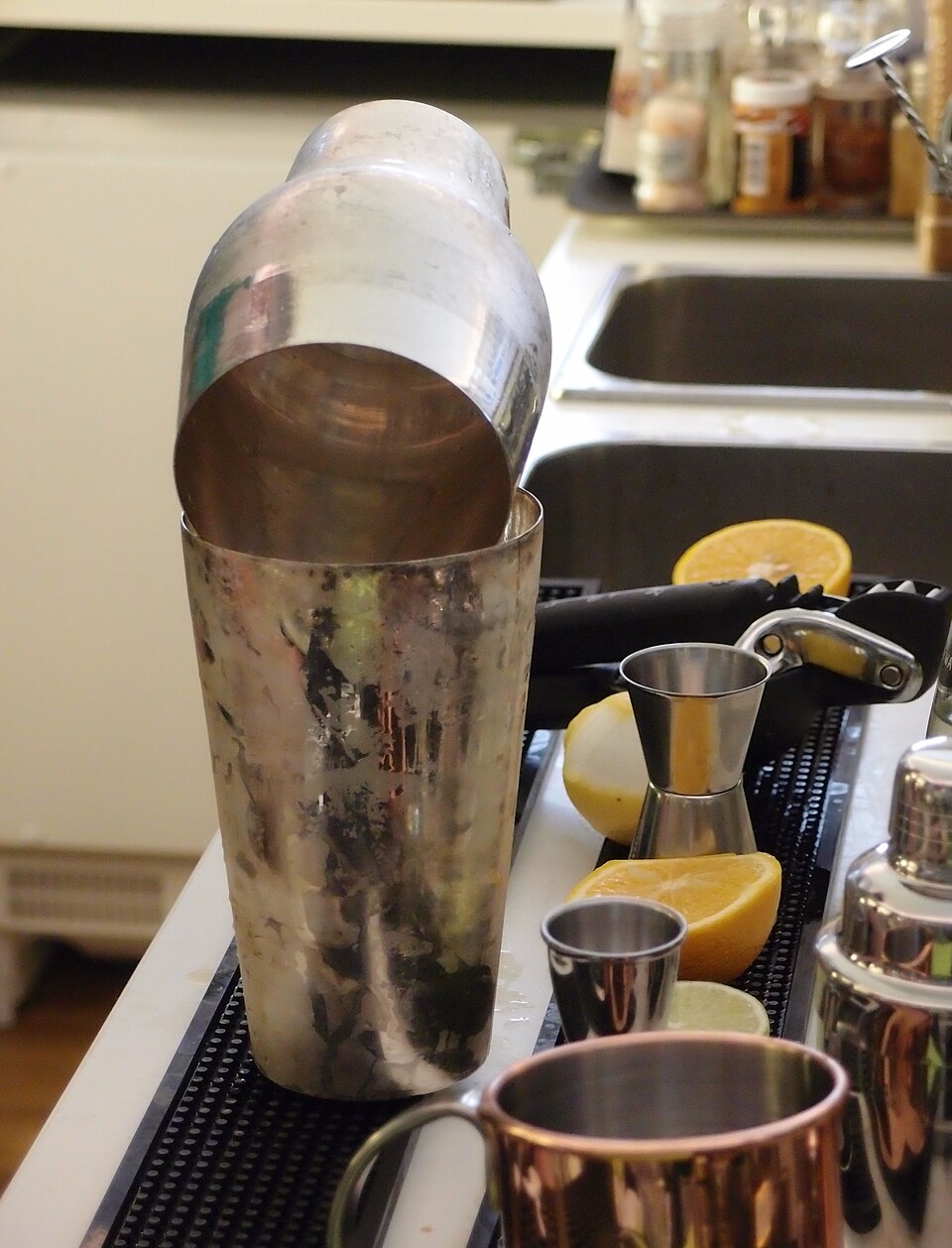
Check the exact model first
A plain two-tin shaker has different components from a shaker with an insulated body, gaskets or a measuring lid. Even if the main body is stainless steel, another part may have a different cleaning requirement. Look for instructions identifying both the model and finish.
Some manufacturers permit their stainless products in dishwashers. That is a statement about those products, not a universal guarantee for every stainless shaker. Home and commercial machines may also have different detergent and temperature conditions.
If the instructions permit machine washing
- Separate the shaker into its removable components.
- Remove fruit pieces and other residue before loading.
- Position the pieces according to the maker’s guidance so wash water can reach inside and drain away.
- Keep loose small parts in an appropriate secure location permitted by the instructions.
- Use the allowed cycle and detergent, then inspect and dry the pieces before storing.
Do not nest the tins together during cleaning. A closed assembled shaker hides the surfaces that need washing and can retain water.
If you cannot confirm compatibility
Wash the separated pieces by hand with warm water, mild washing-up liquid and a non-abrasive sponge. Clean under removable seals only as the instructions permit. Rinse carefully and allow all parts to dry. Avoid forcing apart components that are not intended to be removed.
What about discolouration and odours?
Check seams, straining holes and lid recesses for dried syrup or citrus residue. Repeat the permitted cleaning routine rather than reaching immediately for an abrasive product. If a stain persists, identify the model and use an approved treatment.
A persistent smell can indicate trapped residue or moisture. Inspect the separate parts before putting them away. Do not mask the problem by storing the shaker tightly closed.
Use care instructions as a buying criterion
If machine washing is important to your routine, choose a model with clear compatibility information before buying. Consider the entire assembly, not just the body. A finish you like is useful only if its care requirements also fit your habits.
Frequently asked questions
Does stainless steel automatically mean dishwasher-safe?
No. Check the specific product and every component, including decorative finishes, insulation and seals.
Should I wash the shaker assembled?
No. Separate the removable pieces so their working surfaces can be cleaned and dried.
Can I remove every gasket?
Remove only parts the maker identifies as removable and follow the reassembly guidance.
What if the care label is missing?
Identify the model and look for the maker’s guidance. Until confirmed, use gentle hand washing rather than assuming machine compatibility.