BUYING SHORTLIST · TEN OPTIONS
The best bar tools brand depends on the task. Some catalogues cover a whole cocktail kit; others earn a place through one useful specialist tool. These ten brands provide different starting points for comparison. The order groups practical buying choices rather than claiming a measured winner across unrelated products.
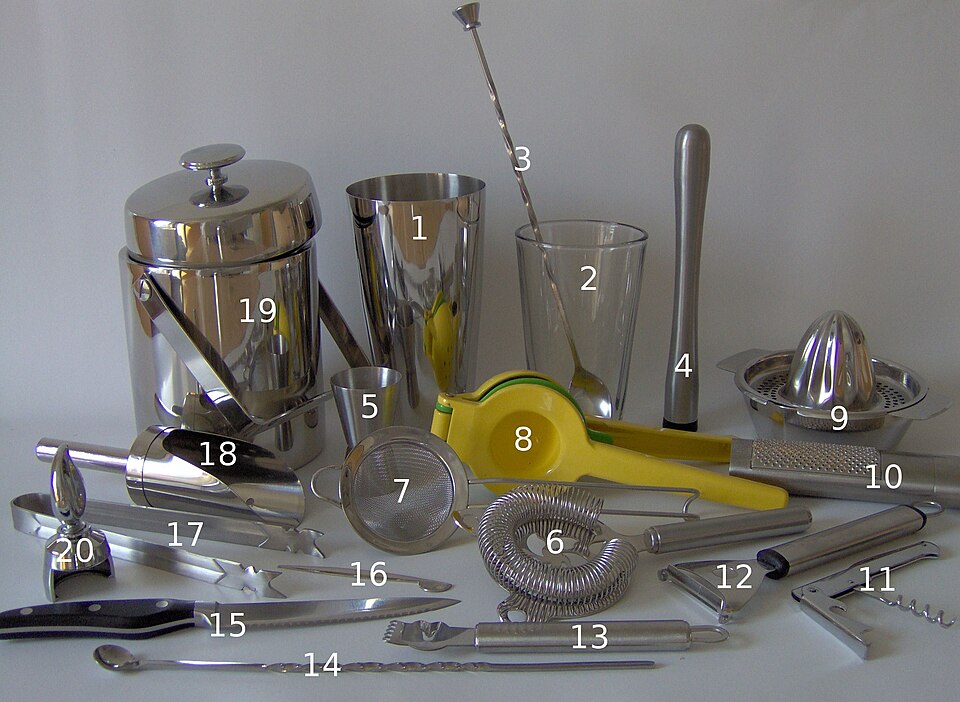
Compare ten brands
| Brand | Why consider it |
|---|---|
| Cocktail Kingdom | A dedicated cocktail-tool range |
| OXO | A bar kit shared with the kitchen |
| A Bar Above | Choosing coordinated cocktail tools |
| Piña Barware | Comparing distinct tool profiles |
| Barfly by Mercer | Comparing many specialised formats |
| Elevated Craft | An integrated shaker design |
| Viski | Considering a wooden muddler |
| Microplane | Fine citrus zest preparation |
| Chef’n | A citrus-press comparison |
| Fletchers’ Mill | A straightforward wooden muddler |
The brands in detail
A dedicated cocktail-tool range
1. Cocktail Kingdom
Products to compare. Koriko tins, Leopold jiggers and Yarai mixing glasses.
Why consider this brand. A useful starting point when you want to compare several traditional cocktail-tool formats in one catalogue. Its named families let you build a kit around a specific shaker, measure and stirring vessel rather than a generic gift set.
What to check. Choose the exact family, material and size. Similar names cover different capacities, and a wide range does not mean every piece is necessary.
A bar kit shared with the kitchen
2. OXO
Products to compare. Angled Jigger, Y-Peeler and citrus tools.
Why consider this brand. Consider OXO when your bar equipment lives in a working kitchen and needs to cover ordinary food preparation too. The angled measuring format also gives you a useful comparison with narrow double-ended jiggers.
What to check. Check the regional version, units and model. A familiar kitchen brand does not make every tool the right size for your cocktail vessel.
Choosing coordinated cocktail tools
3. A Bar Above
Products to compare. Boston shaker, standard bar spoons and silicone bar mats.
Why consider this brand. This is a practical catalogue to compare when you want to assemble the core mixing kit and working area together. Its spoon handle choices are useful for readers who want to think about grip rather than simply buy a matching finish.
What to check. Inspect individual items inside any kit and compare them with tools you already own. A bundle can include pieces you would rarely use.
Comparing distinct tool profiles
4. Piña Barware
Products to compare. Founder’s Tins, Slim and Weighted Bell jiggers, and mixing vessels.
Why consider this brand. Piña is worth considering when you want to compare different measuring profiles and mixing-vessel materials within a barware range. The slim and bell formats give a clear example of choosing by handling preference rather than buying a second colour.
What to check. Porcelain, handblown glass and stainless tools require different checks. Confirm visibility, dimensions and care for each specific item.
Comparing many specialised formats
5. Barfly by Mercer
Products to compare. Shakers, strainers, spoons, prep tools and ice equipment.
Why consider this brand. A broad selection makes Barfly useful when a basic kit is already established and you need a particular head, handle or base format. Model codes are especially helpful when similar-looking tools appear in several sizes.
What to check. Compare exact model numbers. Specialist tools should solve a recurring task, and a long catalogue is not a shopping checklist.
An integrated shaker design
6. Elevated Craft
Products to compare. Original Hybrid Cocktail Shaker.
Why consider this brand. Consider Elevated Craft when a twist-top shaker with an integrated measuring and straining routine is more appealing than interchangeable tins and separate tools. The Original Hybrid provides a concrete design to compare with conventional Boston and Cobbler options.
What to check. Integrated components change cleaning and storage requirements. Assess the particular shaker rather than extending its features to every product in the brand’s range.
Considering a wooden muddler
7. Viski
Products to compare. Professional 12-inch Acacia Muddler.
Why consider this brand. Viski offers a named wooden option to compare when you want a long muddler for a taller vessel. Its acacia model gives this selection a specific starting point rather than relying on styling or a general premium label.
What to check. The recommendation here concerns a particular muddler format. Check reach and head fit, and follow wood-care instructions instead of assuming matching accessories need the same care.
Fine citrus zest preparation
8. Microplane
Products to compare. Premium Classic Zester.
Why consider this brand. Microplane belongs on this list as a specialist option for fine zest. Compare its grating format when a recipe needs small citrus particles rather than the broad aromatic peel strip you would cut with a peeler.
What to check. A zester is a specialist preparation tool, not a complete bar kit. It does not replace a channel knife, peeler or stable cutting board.
A citrus-press comparison
9. Chef’n
Products to compare. FreshForce Plus Citrus Juicer.
Why consider this brand. Consider Chef’n when you are comparing handheld juicers and want another distinct press design alongside OXO and Barfly. Start with fruit size, opening clearance and how the tool will fit in your preparation area.
What to check. Confirm the exact FreshForce model and care guidance. Do not assume the name establishes a particular juice yield or amount of hand force.
A straightforward wooden muddler
10. Fletchers’ Mill
Products to compare. Unfinished maple double-ended muddler.
Why consider this brand. This is a specialist comparison for readers who prefer an unfinished wooden muddler and want to choose its length for a particular vessel. The double-ended form makes head shape part of the purchase decision as well as material.
What to check. Check the selected length and care requirements. Wood needs prompt drying, and this single tool does not establish a complete cocktail-equipment range.
Choose the product before the matching set
Start with the tool that solves your most frequent task, then check compatibility with the pieces already in your kit. You can combine brands: a readable measure, a well-fitting strainer and a suitable vessel do not need identical logos. Compare the particular model’s material, working size and cleaning instructions.
Frequently asked questions
What is the best bar tools brand overall?
There is no single winner for every tool. Compare Cocktail Kingdom, A Bar Above, Piña and Barfly for dedicated cocktail equipment; consider kitchen and specialist brands for particular preparation tasks.
Is it better to buy all tools from one brand?
It can simplify browsing, but the important compatibility is between working pieces, such as a strainer and its vessel. Matching logos do not guarantee that fit.
Are specialist brands suitable for a complete kit?
Some focus on a specific task. A Microplane zester, Chef’n juicer or Fletchers’ Mill muddler can complement a kit without providing every essential mixing tool.
Does a professional label prove better quality?
No. Check the exact material, construction, dimensions and care requirements. Meaningful performance and durability comparisons need evidence beyond a label.
Should beginners choose individual tools or a set?
Compare the contents with your first recipes and existing kitchen tools. A set is useful when the included pieces fit your needs; a long item count is not enough reason to buy it.