Bar Tool Care and Storage
Stop using the shaker for drinks if a coating on its interior is visibly peeling or shedding. The colour name does not identify the coating or the metal beneath it, and a photograph cannot establish that the exposed surface is suitable for continued food contact.
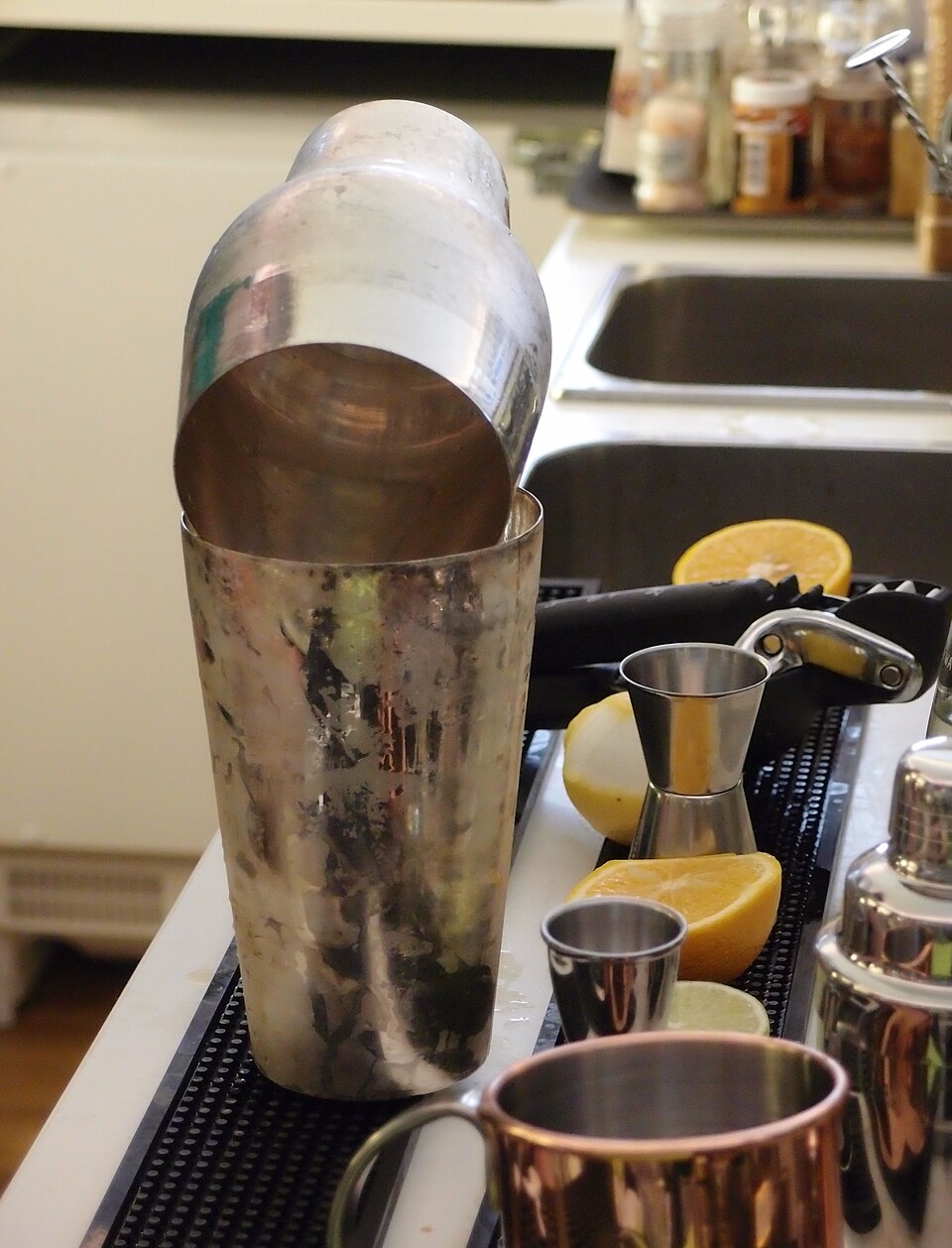
First distinguish a mark from a loose layer
Dry residue, water marks and scratches are different from a surface layer lifting away. Empty the shaker, rinse it gently and inspect it in good light. If flakes, blisters or a loose edge are present inside, set the vessel aside. Do not keep making drinks while waiting to see whether the peeling gets worse.
Gunmetal is often a finish description in barware. It is not a sufficient specification for the coating chemistry, manufacturing process or underlying alloy. The finish outside may also differ from the surface inside.
Why a strainer does not solve the problem
A primary strainer is intended to retain ice and larger ingredients. A fine sieve is not a way to establish the safety of a damaged coating either. Filtering visible flakes does not verify the composition of the remaining food-contact surface or stop it deteriorating.
Food-contact equipment is expected to retain an appropriate, cleanable surface. A coating that is coming away fails the practical inspection you need before routine use. That does not allow a diagnosis of poisoning or a claim about a particular substance; it is enough reason to stop using the damaged vessel.
What to send the seller or manufacturer
- The exact brand, model and finish.
- Clear photographs of the inside, rim and loose area.
- When it was bought and how it was cleaned.
- Whether the instructions allowed the dishwasher or cleaning product used.
- A request for replacement or a documented assessment of the food-contact surface.
Keep the item and order information while the issue is assessed. Do not assume that damage automatically qualifies for a particular warranty outcome; the seller must confirm the applicable terms.
Do not strip and recoat it as a kitchen repair
Scraping, sanding or chemical stripping can create a different unknown surface. Ordinary paint, furniture finish or a general-purpose clear coat is not a verified replacement for a barware food-contact finish. A maker-approved professional repair is different from removing loose material until the vessel looks clean.
Choosing a replacement
A clearly specified uncoated stainless interior can simplify the next purchase, but still inspect the exact construction and care instructions. Separate the pieces after washing and avoid unapproved abrasive cleaners. Colour alone is not a reason to reject a sound tool or to trust a damaged one.
Frequently asked questions
Can I use it if only a small patch is peeling?
Set it aside if a food-contact coating is lifting or shedding. The size of the visible patch does not verify the remaining surface.
Will double straining make the drink safe?
No filtration step establishes the composition or suitability of a damaged coating. Do not use straining as a repair.
Does gunmetal always contain the same material?
No. A barware finish name does not fully specify the coating or underlying alloy.
Can I sand back to stainless steel?
Do not assume the exposed metal is identified or suitable. Ask the maker about replacement or an approved repair rather than stripping it yourself.