A Hawthorne strainer and a Julep strainer both separate a mixed drink from its ice. They differ in shape and how they sit in the vessel. Start with the tool that fits your shaker or mixing glass securely.
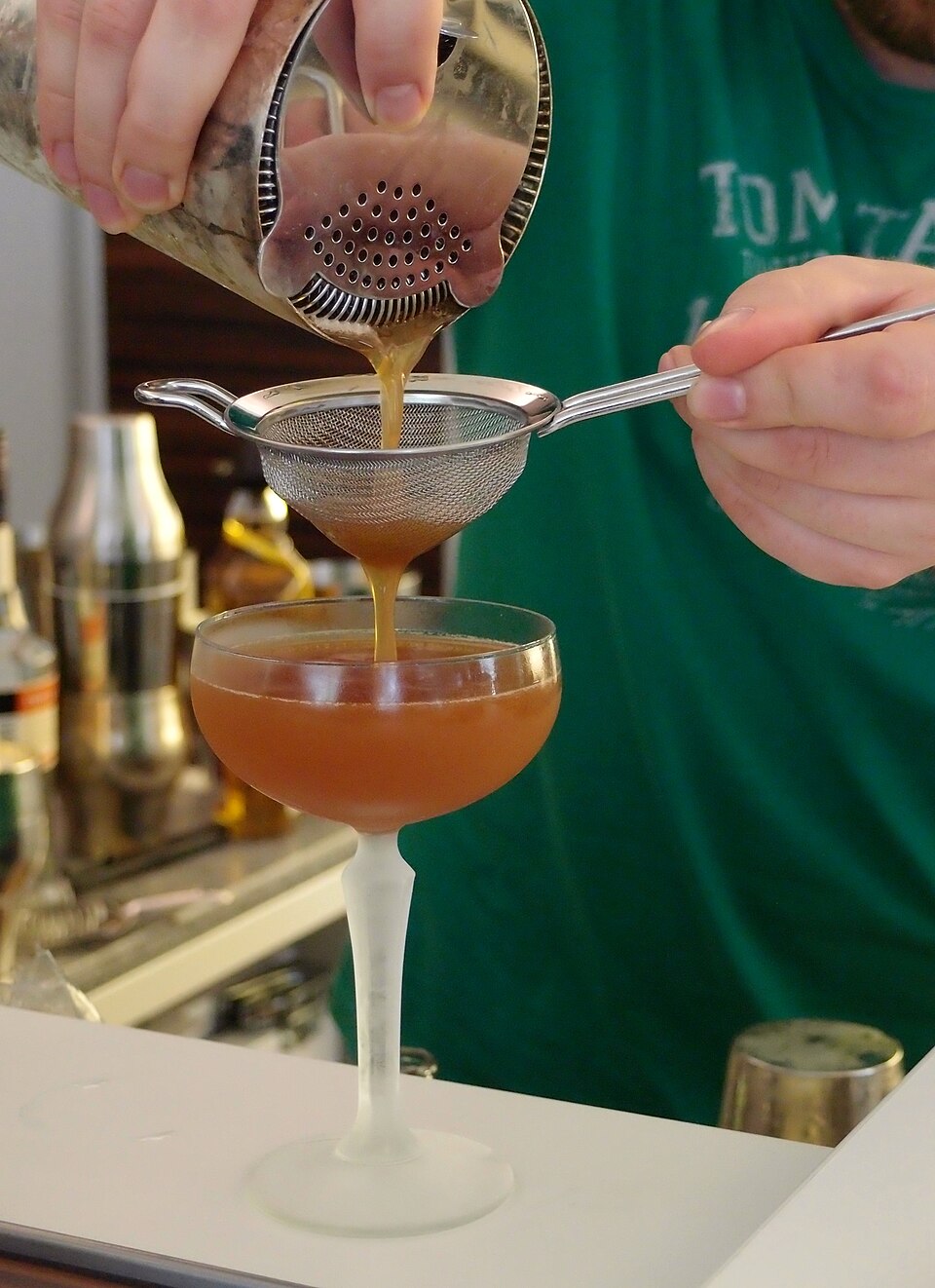
The main differences
| Feature | Hawthorne | Julep |
|---|---|---|
| Shape | Plate with a spring coil | Perforated spoon-shaped bowl |
| Common pairing | Shaker tin | Mixing glass |
| Fit to check | Rim support, spring and finger control | Bowl depth and stability in the vessel |
| Cleaning | Includes coil and possible removable parts | Mainly bowl, holes and handle |
Where the Hawthorne helps
The spring forms a flexible barrier near the opening. Position the strainer as intended by its maker and hold it securely while pouring. A tight coil does not make it equivalent to a fine mesh sieve.
Where the Julep helps
A suitable Julep strainer sits inside a mixing glass and holds back larger ice pieces. Try the combination before you buy: different bowl sizes and glass shapes do not all work equally well together.
Do you need both?
Not immediately. For a small kit built around a two-piece shaker, a compatible Hawthorne is a useful first purchase. Add a Julep if it improves your stirring workflow. Add a separate fine strainer for drinks that need finer filtration.
Test your grip with water before using either tool over fragile glassware. If the strainer shifts during the pour, stop and adjust the fit. See cocktail strainers and double straining for the complete setup.
Which strainer should you use?
| Tool | Typical role | What to check |
|---|---|---|
| Hawthorne | Primary straining from a shaker tin after shaking | The spring and plate fit the vessel and can be controlled during pouring |
| Julep | Primary straining from a mixing glass after stirring | The bowl rests securely at the opening without slipping |
| Fine mesh | A second stage when smaller fragments need filtering | Clearance above the serving glass and mesh condition |
These are common working arrangements, not rules that override actual fit. A suitable Hawthorne can also work with a mixing glass. Neither a perforated plate nor a Julep bowl is the same as a fine mesh sieve.
For a stirred-drink example, see the equipment for an Old Fashioned. Without a dedicated tool, compare strainer substitutes at home.
Frequently asked questions
What is the most visible difference?
A Hawthorne has a spring coil around a perforated plate. A Julep has a perforated bowl that commonly rests inside a mixing glass.
Which should I buy first?
For a kit built around a two-piece shaker, choose a compatible Hawthorne first. A separate Julep can improve a dedicated stirring setup.
Does either remove every small fragment?
No. Fine mesh is a separate filtration stage when the recipe calls for removing smaller pulp, herbs or ice shards.
How do I check compatibility?
Seat the strainer on or in the vessel, practise with water and confirm that your normal pouring grip keeps it secure.