Choose a shaker around your normal serving size and how comfortable it feels in your hands. A large professional-looking vessel is not automatically a better home tool. You need room for ingredients and ice, plus enough headspace for movement.
Decide on the format
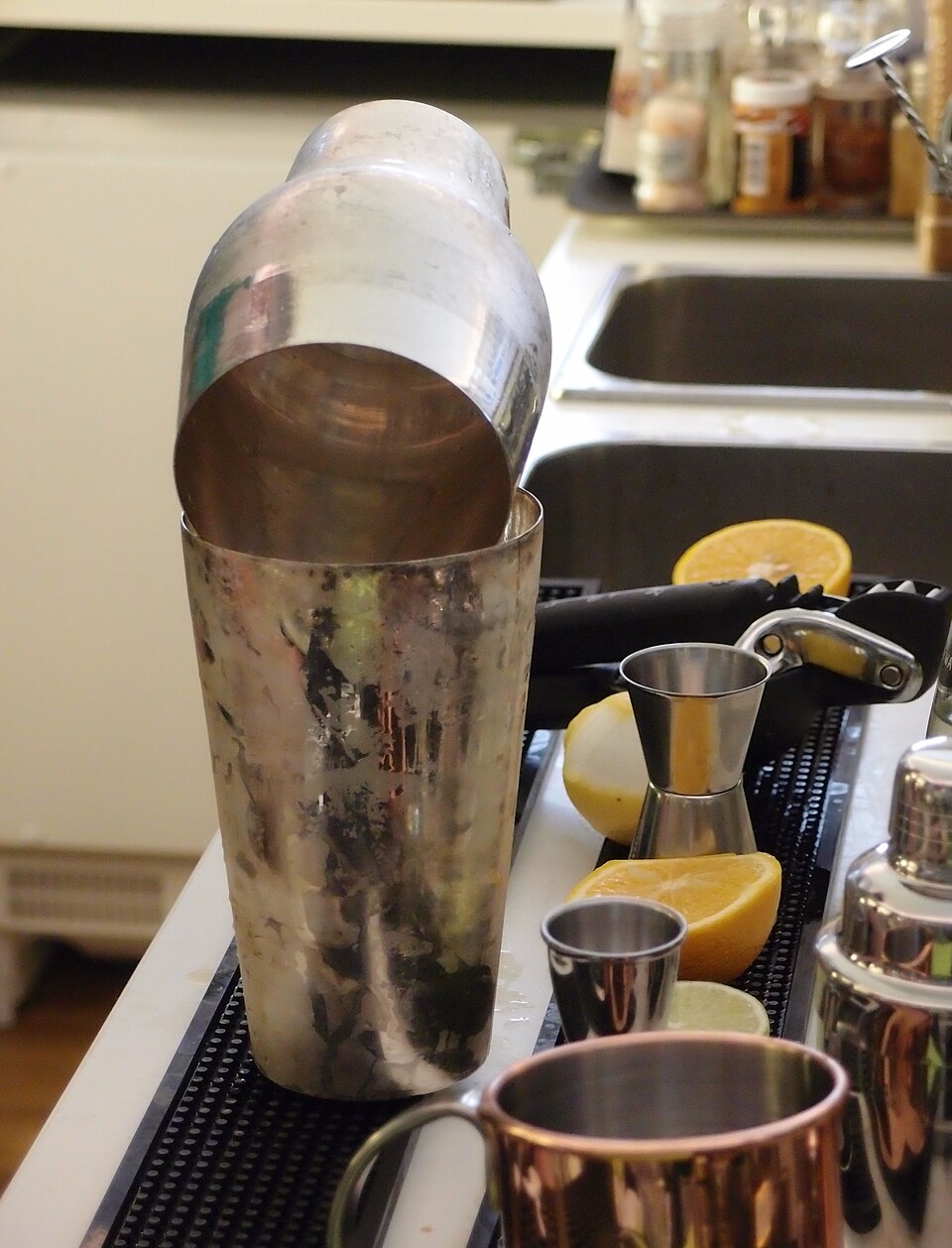
A Boston shaker uses two vessels and a separate strainer. A Cobbler combines a body, straining top and cap. A French shaker uses two shaped metal pieces and also needs a separate strainer. Read the shaker comparison if you are choosing between the first two.
Check four practical details
- Working capacity. Ask how many of your usual drinks fit with ice, not just how much water the vessel holds.
- Grip. You should be able to hold both pieces securely without stretching your fingers awkwardly.
- Seal. The pieces should fit together cleanly and release with the correct technique.
- Care. Check whether the exact finish is dishwasher-safe and whether parts can be replaced.
Think about your strainer
A two-piece shaker needs a strainer that fits its opening. Check the fit before buying a complete kit from several different makers. A fine mesh strainer is an additional tool for smaller fragments, not a substitute for controlling the main ice.
Avoid buying by appearance alone
A polished or coloured finish may suit your bar, but it does not establish better sealing, easier opening or more accurate capacity. Compare the underlying construction and care requirements first.
For a first purchase, choose a straightforward model with clear instructions and a manageable size. Practise with water before using it over a finished serving glass. Keep carbonated ingredients out of a sealed shaker and add them after straining.
Fit the shaker into your kit
A shaker is only one part of the setup. Our beginner bar-tool shortlist explains which companion tools to buy first, while the bar tools brand comparison helps you compare catalogues by the tasks they cover.
Frequently asked questions
What should I check before buying?
Working capacity, secure grip, compatible parts and clear maintenance instructions. Choose for your regular serving size rather than the largest advertised volume.
Is stainless steel a sensible first choice?
A plain stainless model is a practical starting point. Check the specific product instructions rather than assuming all finishes share the same care requirements.
Do I need a separate strainer?
A Boston or French shaker needs one. A Cobbler includes basic straining holes, but may still benefit from fine mesh for some recipes.
Can a new shaker improve a poor technique?
Equipment can make handling easier, but it cannot replace correct measurements, a secure seal and a controlled mixing routine.