Tool Use and Techniques
A useful absinthe spoon rests securely across the glass, supports the sugar cube and lets water pass into the drink. A broad stable support and suitable openings matter more than the name of a decorative pattern.
Start with the glass and cube
Traditional drip preparation places a slotted spoon across the glass, with sugar on the spoon and cold water dripping onto it. Sugar is optional according to the intended preparation and taste. Choose the spoon with the actual glass and cube dimensions in mind.
The spoon needs stable support at the rim. Check the reach of the handle and opposite support, any locating notch and whether the head stays level. A long decorative silhouette does not guarantee a secure fit on a narrow or wide glass.
What head geometry helps?
- A broad central support: enough metal beneath the cube so it does not bridge one large unsupported gap.
- A level resting position: a tilted head encourages sliding as the sugar gets wet.
- Distributed openings: routes for water without removing most of the supporting surface.
- A smooth cleanable surface: no sharp burrs or rough decorative cuts.
A slightly locating shape can be useful, but a deep basin that holds water is a different behaviour from a freely draining slotted head. Evaluate the actual piece rather than assuming a leaf, grille or historical pattern is always best.
Fountain setup matters as much as spoon shape
Place the glass on a stable surface, seat the spoon and position the cube beneath the drip. Adjust the fountain to a controlled drip rather than a jet that knocks the cube aside. As it dissolves, observe where the water falls and keep the glass centred.
Check faucet height, clearance above the spoon and control at a slow flow when choosing a fountain. A fountain that is attractive on a shelf may not suit the height of your serving glasses.
A simple comparison before buying several
Try the candidate with the intended glass and a representative cube using water. Check whether it slides, pools water or catches fragments in hard-to-clean details. Repeat after the spoon is wet. This is a practical fit check, not proof that a particular perforation pattern has been scientifically optimised.
Cleaning and storage
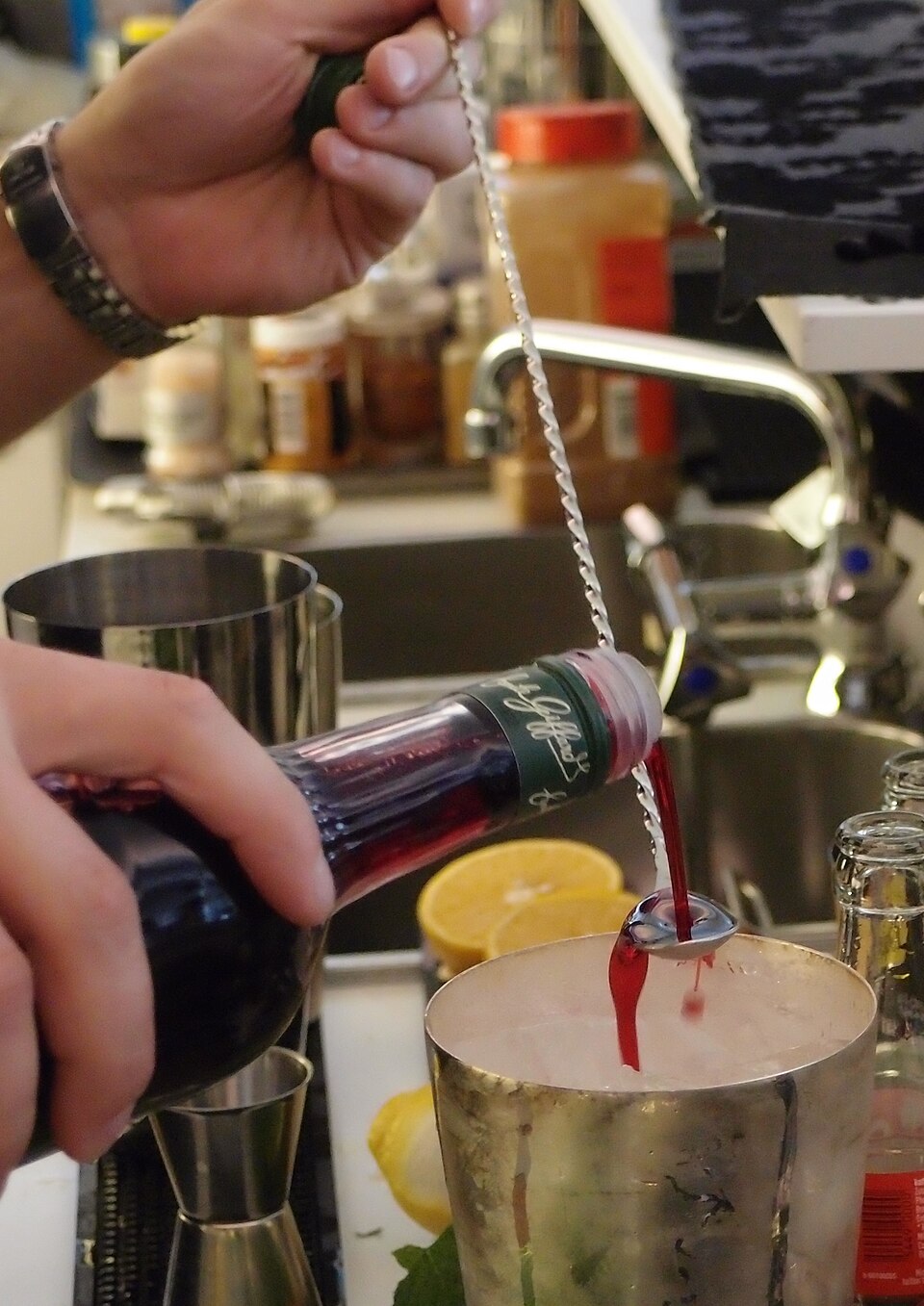
Rinse sugar residue promptly and follow the maker’s care instructions for the spoon finish and fountain parts. A blocked faucet needs the approved cleaning procedure rather than forcing a sharp object into it. The general spoon photograph is an illustration of bar tools, not a specific absinthe-spoon model.
Frequently asked questions
Which decorative pattern is best?
There is no universal winner established here. Compare stable rim support, the area under your cube, drainage and cleanability.
Should the cube sit over one large hole?
Avoid a layout where the cube has little support, especially as it softens. Check the actual head and cube together.
Can a strong stream speed up preparation?
It can displace the cube and change the workflow. Use a controlled drip appropriate to the setup.
Does preparation require burning sugar?
No. This guide covers cold-water drip preparation and does not use a flame.